Sports Nutritionist Roadmap (2026): Fueling Athletic Performance & Metabolic Recovery
Learn how nutritional biochemistry drives championship athletic performance. Master macronutrient periodization, intra-race carbohydrate oxidation, sweat-rate hydration, safe ergogenic supplements, and body composition management.

What's in this guide
The Short Answer: Sports Nutrition in 2026
Sports nutrition is the strategic application of nutritional biochemistry to optimize athletic energy output, enhance post-exercise recovery, preserve lean muscle tissue, and promote lifelong metabolic health. From marathon runners fueling 90g/hr of carbohydrates to collision-sport athletes periodizing protein for tissue remodeling, sports nutritionists are essential members of high-performance teams.
In 2026, sports nutrition is heavily data-driven: continuous glucose monitoring (CGM) in endurance sports, sweat sodium patch testing, dual-energy X-ray absorptiometry (DEXA) body composition scans, and strict monitoring for Relative Energy Deficiency in Sport (RED-S).
Nutrition must match the training demand. 'Periodized nutrition' means eating for the work required: fueling high-carbohydrate volumes on intense double-session days and moderating energy intake on rest or recovery days.
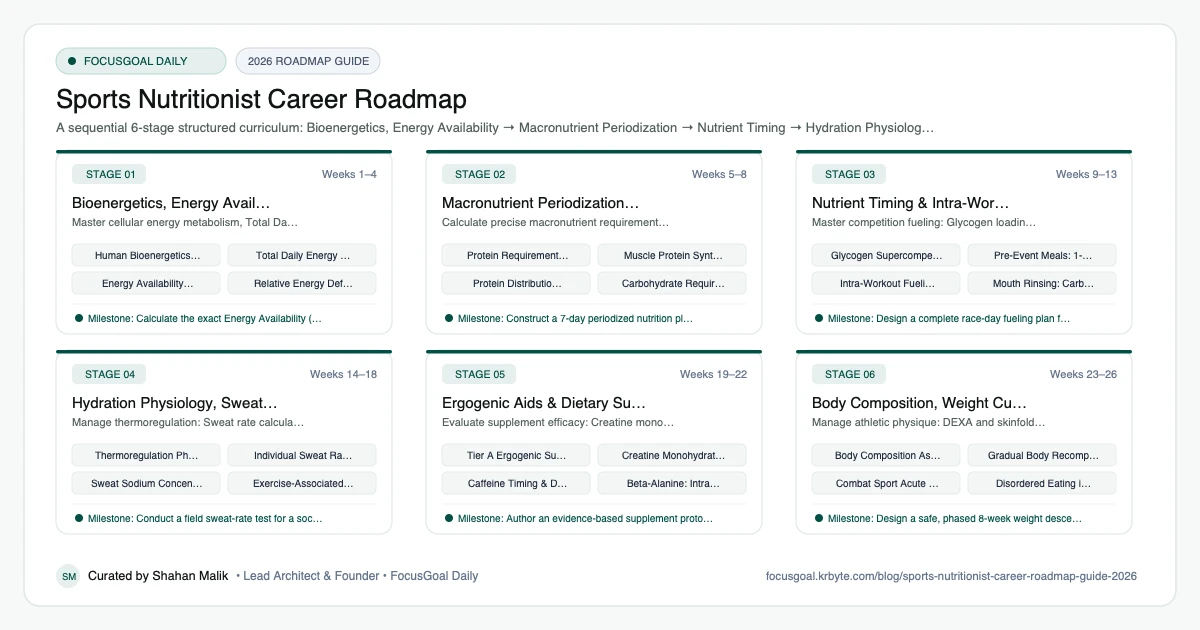
The 6 Production Stages
Follow these structured, sequential stages to systematically build production competence:
Bioenergetics, Energy Availability & RED-S
Master cellular energy metabolism, Total Daily Energy Expenditure (TDEE), Energy Availability (EA), and RED-S syndrome.
Macronutrient Periodization & Protein Kinetics
Calculate precise macronutrient requirements: Protein intake per kilogram, Muscle Protein Synthesis (MPS), and leucine thresholds.
Nutrient Timing & Intra-Workout Carbohydrate Oxidation
Master competition fueling: Glycogen loading, pre-workout meals, multiple transportable carbohydrates, and post-exercise recovery.
Hydration Physiology, Sweat Testing & Electrolyte Balance
Manage thermoregulation: Sweat rate calculation, sodium loss testing, hyponatremia prevention, and fluid replacement.
Ergogenic Aids & Dietary Supplements (Informed-Sport)
Evaluate supplement efficacy: Creatine monohydrate, caffeine, beta-alanine, nitrates, and anti-doping (WADA/NSF certification).
Body Composition, Weight Cutting & Clinical Counseling
Manage athletic physique: DEXA and skinfold assessment, safe gradual fat loss, combat sport acute weight cuts, and disordered eating.
Is a Career in Sports Nutrition Worth It in 2026?
Sports nutrition helps athletes and active people use food and hydration to support training, recovery, and health. Roles exist in clubs, universities, private practice, fitness businesses, food companies, and public health, and public interest in performance and wellbeing keeps the field visible.
The caveats: the term nutritionist is poorly regulated in some places and protected in others, misinformation is common, and income can vary widely. Credibility depends on evidence-based practice and appropriate credentials. This article is general educational information, not medical advice. Scope of practice, titles, and credentials vary by country, so check your local regulator or professional body for what you are allowed to do and how to qualify.
- Good fit if you enjoy science, behaviour change, and communicating clearly.
- Working with medical conditions or eating disorders requires appropriate clinical qualifications.
- Evidence-based advice matters more than trends.
Sports Nutritionist vs Dietitian vs Fitness Trainer: What Is the Difference?
In many countries, dietitian is a legally protected title for clinicians who can provide medical nutrition therapy, while nutritionist may be regulated differently or not at all. Sports nutritionists focus on performance and training nutrition. Fitness trainers can usually give only general healthy-eating guidance within their scope, and not individualised dietary prescriptions.
Rules differ widely, so check your local regulator. Compare our Fitness Trainer Career Roadmap and Sports Medicine Career Roadmap for how nutrition fits with training and clinical care.
Skills, Tools & Resources You Will Use in Sports Nutrition
Core knowledge includes macronutrients and micronutrients, energy balance, hydration, nutrient timing, and how nutrition interacts with training load and recovery. You will also need counselling and behaviour-change skills, since practical adherence is often the main challenge.
Typical resources include food composition databases, dietary assessment methods such as food records, position statements from recognised sports nutrition and dietetic bodies, and scientific literature. Learning to read research critically is a key skill.
- Food composition databases and dietary analysis software.
- Dietary assessment methods such as food diaries and recalls.
- Position statements from recognised professional bodies.
- Motivational interviewing and behaviour-change techniques.
Qualifications, Licensing & How to Get Your First Sports Nutrition Role
Routes differ by country: some require a degree in dietetics or nutrition and registration to use certain titles or treat medical conditions, while others have voluntary registers and certifications for sports nutrition. Postgraduate study or a sports-specific certification can add credibility on top of a foundation degree.
To get started, gain placements in clinical, sports, or community settings, work under qualified supervision, and keep up with the research. This article is general educational information, not medical advice. Scope of practice, titles, and credentials vary by country, so check your local regulator or professional body for what you are allowed to do and how to qualify.
- Check whether titles and services are legally protected where you live.
- Seek supervised placements and mentoring from registered professionals.
- Refer clients with medical conditions or disordered eating to qualified clinicians.
Beginner Pitfalls vs Production Reality
Self-taught developers commonly waste months making avoidable structural mistakes. Here is how production engineers approach these challenges:
Master Sports Nutrition with FocusGoal Daily
Sports nutrition requires calculating exact metabolic rates, carbohydrate oxidation ratios, and electrolyte replacement formulas. FocusGoal Daily turns nutritional science into disciplined daily milestones.
- Daily micro-tasks for carbohydrate loading calculations, protein kinetic formulas, and sweat-rate math.
- Track study streaks offline while working with athletes in training facilities, dining halls, or travel tournaments.
- Instant AI explanations for SGLT1/GLUT5 dual transport, RED-S energy thresholds, and Informed-Sport anti-doping rules.
Track this roadmap,
one topic at a time.
Download FocusGoal, pick this roadmap and finish your first daily topic in minutes.
Frequently Asked Questions
What is the difference between a Sports Dietitian and a Sports Nutritionist?
A Registered Dietitian (RD) with a Board Certified Specialist in Sports Dietetics (CSSD) credential has completed an accredited clinical degree, 1,000+ supervised clinical hours, and passed a national registration examination. In many jurisdictions, 'nutritionist' is an unregulated title, whereas 'dietitian' is legally protected.
How much protein can the human body absorb in one meal?
The body can absorb virtually all ingested protein, but Muscle Protein Synthesis (MPS) maxes out around 0.40–0.55 g/kg per meal (typically 20–40g of high-quality protein containing ~3g leucine). Consuming protein every 3–4 hours optimizes MPS throughout the day.
What is Relative Energy Deficiency in Sport (RED-S)?
RED-S is a clinical syndrome caused by insufficient energy intake relative to exercise expenditure (low Energy Availability). It impairs metabolic rate, bone health, menstrual cycle, immune function, protein synthesis, and psychological wellbeing in both female and male athletes.
What does a sports nutritionist do?
A sports nutritionist advises athletes and active people on food, fluids, and supplements to support training, performance, and recovery. Their scope depends on local credentials and rules.
Is sports nutrition hard to study?
It involves physiology, biochemistry, and research literacy, which can be demanding. Most students manage well with a solid science foundation and consistent study.
How long does it take to become a sports nutritionist?
It depends on your country's education and registration requirements, as some routes involve a full degree and supervised practice. Check your local regulator or professional body.
Sports nutritionist vs dietitian: what is the difference?
A dietitian is often a legally protected clinical title allowing medical nutrition therapy, while sports nutritionist roles focus on performance and may be regulated differently. Rules vary by country.
Do I need a license or certification to be a sports nutritionist?
It depends on where you live: some places protect titles and require registration, while others do not. Check your local regulator before offering advice or using a title.
Start Your Sports Nutritionist Today
Follow structured daily goals, study 100% offline with local SQLite, and get on-demand AI guidance with FocusGoal Daily on Android.
Get FocusGoal Daily Free on Google Play