Fitness Trainer Roadmap (2026): From Exercise Science to Elite Client Coaching
Learn how to transform human movement and physical conditioning. Master joint biomechanics, periodized training cycles, movement assessments, metabolic conditioning, and client habit psychology.

What's in this guide
The Short Answer: Personal Training in 2026
Modern fitness training has evolved from generic workout routines into evidence-based exercise physiology. Today's clients demand personalized programs that correct movement dysfunction, build functional strength, optimize body composition, and enhance long-term healthspan.
In 2026, an elite fitness trainer integrates wearable biometric tracking (HRV, sleep, recovery), progressive overload mathematics, biomechanical joint mechanics, and motivational interviewing. Success requires bridging scientific kinesiology with inspiring, empathetic coaching.
Do not add load to movement dysfunction. Screen client movement patterns first (squat, hinge, push, pull, carry) and restore mobility and stability before programming heavy axial loading.
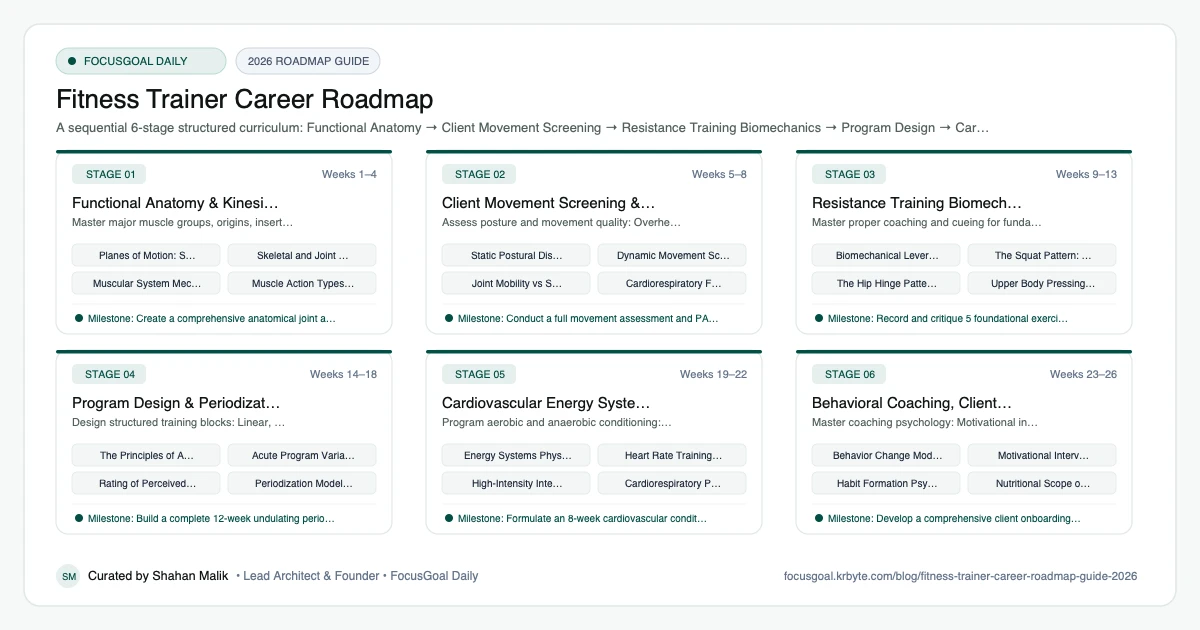
The 6 Production Stages
Follow these structured, sequential stages to systematically build production competence:
Functional Anatomy & Kinesiology
Master major muscle groups, origins, insertions, joint actions, planes of motion, and force-couple relationships.
Client Movement Screening & Postural Assessment
Assess posture and movement quality: Overhead Squat Assessment (OHSA), Functional Movement Screen (FMS), and mobility tests.
Resistance Training Biomechanics & Technique
Master proper coaching and cueing for fundamental movement patterns: squat, hip hinge, lunge, horizontal/vertical push and pull.
Program Design & Periodization (Hypertrophy & Strength)
Design structured training blocks: Linear, undulating (DUP), and block periodization, managing volume, intensity, and fatigue.
Cardiovascular Energy Systems & Metabolic Conditioning
Program aerobic and anaerobic conditioning: Heart rate zones, VO2 max development, and High-Intensity Interval Training (HIIT).
Behavioral Coaching, Client Retention & Business Operations
Master coaching psychology: Motivational interviewing, habit architecture, client onboarding, and personal training business models.
Is a Career as a Fitness Trainer Worth It in 2026?
Personal training suits people who enjoy coaching others, understand exercise basics, and are comfortable building a client base. Opportunities exist in gyms, studios, corporate wellness programmes, online coaching, and independent practice, and interest in health and strength training shows little sign of fading.
The caveats: income can be uneven, especially early on, and success depends as much on communication and business skills as on knowledge. Pay varies widely by location and business model. This article is general educational information, not medical advice. Scope of practice, titles, and credentials vary by country, so check your local regulator or professional body for what you are allowed to do and how to qualify.
- Good fit if you enjoy teaching and motivating people from different backgrounds.
- Online coaching and specialisations can widen your market.
- Staying within your scope and referring clients with medical issues is part of the job.
Skills, Tools & Resources You Will Use as a Fitness Trainer
Core skills include exercise technique, programme design using principles such as progressive overload and specificity, movement screening, and clear coaching cues. Just as important are client communication, goal-setting, and motivational skills that keep clients consistent.
Typical tools include training-log and programming apps, basic assessment tools such as a tape measure and heart-rate monitor, and CPR and first aid training. Evidence-based position statements from recognised professional bodies are good references for programme design.
- Programming principles: progressive overload, specificity, and recovery.
- Client intake forms and pre-exercise screening questionnaires.
- Training-log and coaching software for tracking progress.
- CPR, AED, and first aid certification.
Qualifications, Certification & How to Get Your First Fitness Trainer Role
In many countries, personal training is not a strictly licensed profession, but employers and insurers usually expect a recognised certification, current CPR or first aid training, and liability insurance. Some countries have registers or accredited qualifications, and degrees in exercise science or kinesiology can open further roles.
To land a first role, consider apprenticeships or junior positions at gyms, shadow experienced trainers, and build a track record with a small number of clients. This article is general educational information, not medical advice. Scope of practice, titles, and credentials vary by country, so check your local regulator or professional body for what you are allowed to do and how to qualify.
- Choose a certification recognised by your local registers or major employers.
- Keep CPR and first aid current and carry professional insurance.
- Learn when to refer clients to doctors or physiotherapists.
Beginner Pitfalls vs Production Reality
Self-taught developers commonly waste months making avoidable structural mistakes. Here is how production engineers approach these challenges:
Master Fitness Training with FocusGoal Daily
Personal training demands deep mastery of joint kinesiology, periodization formulas, and movement screening rules. FocusGoal Daily turns this wide syllabus into disciplined daily study milestones.
- Daily micro-tasks for anatomical muscle actions, acute variables, and periodization cycles.
- Track study streaks offline while working on the gym floor or coaching client sessions.
- Instant AI explanations for OHSA movement compensations, RPE/RIR scale conversions, and force-couple dynamics.
Track this roadmap,
one topic at a time.
Download FocusGoal, pick this roadmap and finish your first daily topic in minutes.
Frequently Asked Questions
Which personal training certification is most respected?
Certifications accredited by the NCCA (National Commission for Certifying Agencies) are the gold standard. NASM-CPT, CSCS (NSCA), ACE, and ACSM are universally recognized by major gym facilities and athletic programs.
What is the difference between a Personal Trainer and a Strength & Conditioning Coach (CSCS)?
Personal Trainers generally work with general-population clients focusing on fat loss, muscle building, movement health, and overall wellness. Strength & Conditioning Coaches (CSCS) specialize in training competitive athletes to optimize sports performance, agility, power, and injury prevention.
What is Zone 2 cardio and why is it popular?
Zone 2 cardio is low-to-moderate intensity aerobic exercise where energy is derived predominantly through fat oxidation within mitochondria. It builds substantial cardiovascular efficiency, lowers resting heart rate, and improves metabolic recovery without causing high central nervous system fatigue.
What does a personal trainer do?
A personal trainer assesses a client's goals and fitness, designs a safe exercise programme, and coaches them through it. They also track progress and adjust the plan as the client improves.
Is becoming a personal trainer hard?
The entry certification is usually achievable with study, but building a steady client base takes time. The harder skills are coaching, communication, and business management.
How long does it take to become a personal trainer?
Certification courses vary in length depending on the provider and country. Check recognised providers in your region for typical duration and requirements.
Personal trainer vs sports coach: what is the difference?
A personal trainer focuses on individual fitness goals, while a sports coach develops athletes' sport-specific skills and tactics. See our Sports Coach Career Roadmap for more.
Do I need a license or certification to be a personal trainer?
Many places do not require a statutory licence, but employers and insurers typically expect a recognised certification. Check your local regulator or professional body.
Start Your Fitness Trainer Today
Follow structured daily goals, study 100% offline with local SQLite, and get on-demand AI guidance with FocusGoal Daily on Android.
Get FocusGoal Daily Free on Google Play