Sports Coach Roadmap (2026): From Tactical Strategy to Championship Team Culture
Learn how to build winning teams and develop elite athletic talent. Master tactical game models, motor skill acquisition, data-driven performance analytics, sports psychology, and team leadership.

What's in this guide
The Short Answer: Sports Coaching in 2026
Sports coaching is the art and science of guiding athletes to maximize their physical, technical, tactical, and psychological potential. Whether coaching youth development academies, collegiate programs, or professional franchises, coaches create the framework in which talent flourishes under pressure.
In 2026, modern coaching combines traditional tactical acumen with modern data analytics: GPS player tracking, video tagging software (Hudl), heart-rate variability load monitoring, and ecological dynamics skill acquisition.
Drills that isolate technique from dynamic in-game decision-making do not transfer well to live competition. Use the Constraints-Led Approach (CLA) to create representative practice environments that force athletes to perceive, decide, and act simultaneously.
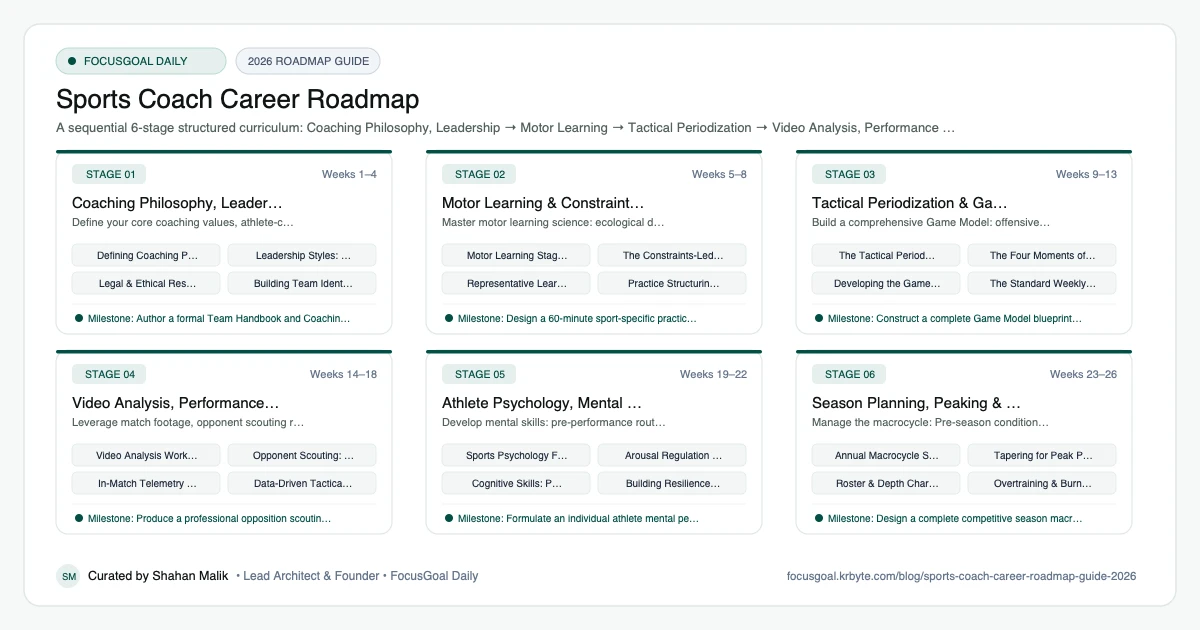
The 6 Production Stages
Follow these structured, sequential stages to systematically build production competence:
Coaching Philosophy, Leadership & Ethics
Define your core coaching values, athlete-centered leadership style, ethical codes of conduct, and organizational alignment.
Motor Learning & Constraints-Led Skill Acquisition
Master motor learning science: ecological dynamics, constraints-led approach (CLA), representative design, and feedback timing.
Tactical Periodization & Game Model Architecture
Build a comprehensive Game Model: offensive/defensive transitions, sub-principles, and weekly morphocycle planning.
Video Analysis, Performance Scouting & Telemetry
Leverage match footage, opponent scouting reports, GPS athlete load telemetry, and performance key performance indicators (KPIs).
Athlete Psychology, Mental Toughness & Communication
Develop mental skills: pre-performance routines, arousal control, emotional resilience, and constructive feedback loops.
Season Planning, Peaking & Roster Management
Manage the macrocycle: Pre-season conditioning, in-season tactical maintenance, playoff peaking, and player load monitoring.
Is a Career in Sports Coaching Worth It in 2026?
Coaching can be deeply rewarding for people who love a sport and enjoy developing others. Opportunities include schools, clubs, academies, community programmes, national federations, and performance-analysis roles, and many coaches begin part-time or as volunteers before moving into paid positions.
The honest caveats: paid full-time roles can be competitive, hours often include evenings and weekends, and income varies a lot between sports and countries. Safeguarding and duty-of-care responsibilities are part of the job. This article is general educational information, not medical advice. Scope of practice, titles, and credentials vary by country, so check your local regulator or professional body for what you are allowed to do and how to qualify.
- Good fit if you enjoy teaching, leadership, and planning.
- Many coaches combine coaching with teaching or other work, especially early on.
- Performance analysis and data skills can open additional roles.
Skills, Tools & Resources You Will Use as a Sports Coach
Core coaching skills include session planning, clear demonstration and feedback, athlete development principles, and managing group dynamics. Periodisation, which means organising training across a season, helps balance workload and recovery. Communication and the ability to build trust with athletes and parents are critical.
Common tools include video analysis software, training-load and attendance tracking, session-planning templates, and governing-body coaching resources. Safeguarding training and first aid are standard expectations in most organised sport.
- Session plans and seasonal planning (periodisation) templates.
- Video analysis tools for technique and tactics review.
- Governing-body coaching manuals and rules of your sport.
- Safeguarding, first aid, and emergency action plan training.
Qualifications, Certification & How to Get Your First Coaching Role
Most coaching pathways are run by national or international governing bodies of each sport, which usually offer tiered coaching awards. Schools and some roles may require additional background checks, safeguarding training, or teaching qualifications. Degrees in sport science or coaching can help for higher-level roles but are not always required.
To get started, volunteer as an assistant coach, shadow experienced coaches, and complete your sport's entry-level coaching award. This article is general educational information, not medical advice. Scope of practice, titles, and credentials vary by country, so check your local regulator or professional body for what you are allowed to do and how to qualify.
- Check your sport's governing body for coaching awards and requirements.
- Complete safeguarding and background checks where required.
- Build experience by assisting at clubs, schools, or community programmes.
Beginner Pitfalls vs Production Reality
Self-taught developers commonly waste months making avoidable structural mistakes. Here is how production engineers approach these challenges:
Master Sports Coaching with FocusGoal Daily
Sports coaching combines tactical game theory, motor learning science, and athletic leadership. FocusGoal Daily turns extensive coaching syllabi into disciplined daily learning milestones.
- Daily micro-tasks for tactical periodization rules, coaching philosophy drills, and game model principles.
- Track study streaks offline while traveling on team buses, in locker rooms, or on the sidelines.
- Instant AI explanations for Constraints-Led Approach concepts, ACWR injury thresholds, and IZOF arousal regulation.
Track this roadmap,
one topic at a time.
Download FocusGoal, pick this roadmap and finish your first daily topic in minutes.
Frequently Asked Questions
What is Tactical Periodization?
Tactical Periodization is a modern training methodology pioneered by Vítor Frade that organizes all physical, technical, and mental training around the coach's specific 'Game Model'—meaning players never train fitness in isolation from actual game tactics.
What is the Constraints-Led Approach (CLA)?
The Constraints-Led Approach is a motor learning framework where coaches modify task constraints (e.g., smaller field, touch limits, uneven numbers) to guide athletes to organically discover optimal tactical solutions rather than dictating rigid movement instructions.
How do I handle challenging sports parents as a coach?
Establish clear, proactive communication early. Hold a mandatory pre-season parent meeting outlining team culture and policies, and enforce a strict '24-hour rule' requiring parents to wait 24 hours after a game before discussing playing time concerns.
What does a sports coach do?
A sports coach plans training, teaches technique and tactics, and prepares athletes or teams for competition. They also support athlete development, welfare, and communication with parents or organisations.
Is becoming a sports coach hard?
Starting is often straightforward through volunteering and entry-level awards. Progressing to paid or elite roles is more competitive and depends on experience, results, and qualifications.
How long does it take to become a sports coach?
Entry-level coaching awards can often be completed relatively quickly, but advanced levels take years of experience. Check your sport's governing body for specific timelines.
Sports coach vs fitness trainer: which should I choose?
Choose coaching if you love developing performance in a specific sport, and fitness training if you prefer general health and strength goals. See our Fitness Trainer Career Roadmap.
Do I need a license to coach?
Requirements depend on the sport, level, and country, and often involve governing-body awards, safeguarding training, and background checks. Check with your local governing body or regulator.
Start Your Sports Coach Today
Follow structured daily goals, study 100% offline with local SQLite, and get on-demand AI guidance with FocusGoal Daily on Android.
Get FocusGoal Daily Free on Google Play